One puzzle, one timer, two tables
Speed puzzling, without waiting for an event.
It is what it sounds like: jigsaw puzzles raced against a timer, a calm hobby grown into a sport with clubs, national associations and a world championship. It also has a thin calendar, and most of the year the nearest event is nowhere near you. So after the rules, the times and the technique, this page gives you the race itself: two people, one identical cut of one painting, first finished wins. In your browser, free.
free · no sign-up · two of you · first finished wins
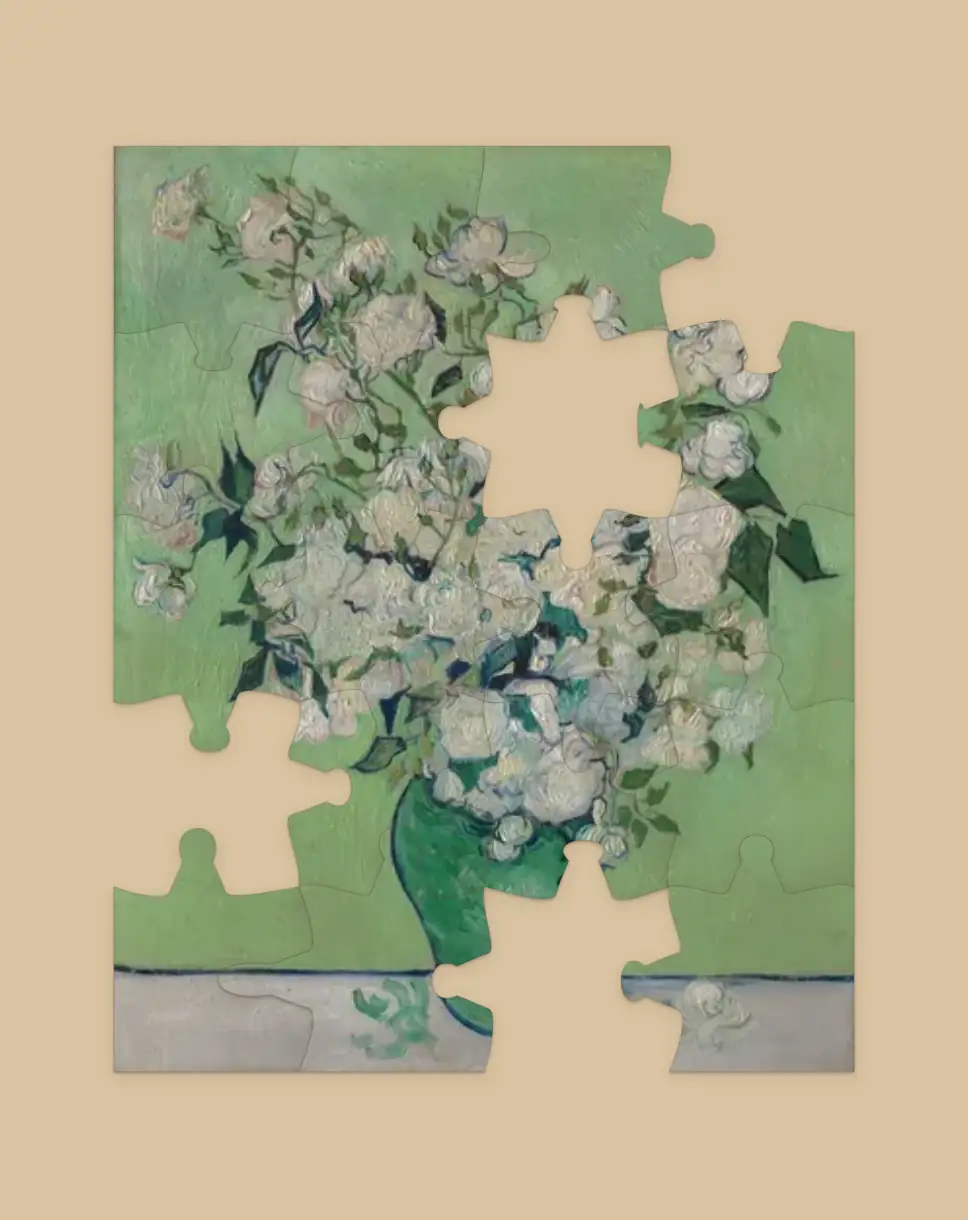
same painting, same cut, separate tables.
The hobby
What is speed puzzling?
Speed puzzling means solving a jigsaw puzzle against the clock, solo or against other puzzlers. Everyone is handed the same puzzle, kept sealed until the timer starts, and the first person, pair or team to place every piece wins. Anyone still building when time runs out is scored on pieces placed.
The community around it has grown quickly in the last few years. Club heats take place in libraries and pubs, national associations, USA Jigsaw among them, run competitions of their own, and the World Jigsaw Puzzle Championship fills a hall in Valladolid, Spain with the fastest puzzlers anywhere. Between the big dates, speed puzzlers post their times for recent puzzles online and compare notes with others from home. Racing turns a quiet hobby into a shared, slightly breathless kind of fun.
The format
How the competitions work.
The rules are simple and strict. Every entrant gets one of a set of identical puzzles, usually 500 pieces, sealed until the start. Quickest to finish wins. Each event sets a limit, and anyone still going when it closes is ranked by pieces placed. Speed puzzling competitions run in classes, individual, pairs and teams, with the rules and results published for each event, so you can see exactly where you landed. The goal never changes: all pieces down, faster than the next table. Speed puzzling records from 2022 on set the scale: that January, Guinness World Records entered Jana Hanzelková’s 46 minutes 35 seconds for 500 pieces in its books, a mark set at the first Valladolid final in 2019. Championship winning runs have since dropped under 38 minutes.
If you have searched for speed puzzling near me hoping to find a club, and the one event listed is three months out in another city, that is normal. The hobby is young, and events cluster in a handful of cities. The association calendars above list what is coming. For every other evening, we built a table that lets two people compete at home.
Benchmarks
What is a good speed puzzling time?
On 500 pieces, finishing inside two hours is a solid opening result at home. The world championship gives its first round 90 minutes, regulars work down toward one hour, and the winning runs in the Valladolid final are under 38 minutes. Unhurried, most people take an afternoon over the same count, which is what makes those numbers feel unreal.
Piece count, cut and picture decide how difficult a puzzle is, so compare like with like. A garden of roses almost sorts itself, a flat sky does not, which is why racers hope for busy, high-contrast pictures when the box opens. Your honest benchmark is your own last time on a similar count, and beating it matters more than a stranger’s record.
Technique
The technique, in plain terms.
Watch a fast puzzler solve one and there is no secret move, only an order of operations that never pauses. Those sorting skills build with every timed run.
Flip once, sort once
Turn the whole scatter picture side up the moment it lands, and sort while you flip: edges in one pile, loud colours in their own. Sorting trays help. Fast hands are mostly fast sorting.
The border is a choice
Frame first is comfortable, and plenty of fast puzzlers skip it when the edge is all one colour. Start where the picture is loudest, and let the border wait its turn.
Small zones, joined late
Build several islands at once and join them when they are ready. When a zone slows, leave it. The clock rewards motion, not stubbornness.
Then practice the way racers do. The quickest way to improve is the same count again and again, solo against your own time.
No event required
Race tonight, on the identical cut.
A competition needs a hall, a calendar and a hundred sealed puzzles. A race needs one other person. Battle is our racing table, and it keeps what makes an event an event: one sealed picture, a simultaneous start, a judged finish.
first
Open a race
Pick a clean race, up to 150 pieces, or ghost pieces, up to 100. The site deals the painting from a reviewed set of Met open-access artworks, so neither of you chooses it, and neither of you sees it early. They make good race puzzles: strong colour, clear zones.
then
Send the link
Share it however you like. One seat waits on the other side. No account, nothing to install, phones and laptops both fine, and voice in the room if you both want it.
and
Ready, then race
The pieces stay hidden until you are both ready, then both tables open in the same moment: the same cut, the same scatter. First finished puzzle wins, and the server does the judging, so the finish is called once, cleanly.
Fair by construction
Same cut, same scatter, no peeking.
We build and run this table ourselves, and we put the fairness in at the server, because a race is only fun while nobody can cheat.
A sealed deal
The painting is chosen when the table is made, by the site, from a fixed, reviewed collection. You both meet it at the ready check, like a sealed box at an event.
A clean race is blind
Your browser is never sent the other player’s piece positions, only their score. Opening developer tools turns up a number and no board. You read “ahead by four pieces”, and you keep sorting.
Ghosts, if you like nerve
In a ghost race, faint ghost pieces show where your rival is working. Watching their corner fill while yours resists is its own kind of pressure. Choose the version your evening can take.
One honest note. This is a race between two people, a kitchen-table match, and no more. There are no leaderboards here, no rankings, no prizes, no federation. Only the timer, the cut and the person on the other side. When you want the official version, the associations above are where it lives.
Questions
Answers, before the timer starts.
Is speed puzzling a thing?
Yes, and growing. Clubs meet in person, national associations run heats of their own, and the championship in Valladolid draws competitors from all over the world. Online, puzzlers track their times and compare runs all year. It is a young, exciting sport that is still friendly to beginners.
What is the meaning of speed puzzling?
Solving jigsaws against a timer, competitively or not. The name stretches from racing your own best at the kitchen table to sealed-box finals with referees in Valladolid. If there are pieces and a stopwatch, it counts.
What is the speed puzzling technique?
Sort while you flip, build several zones at once, and treat the border as optional. At home, add the one habit an event forces on you: a hard start and a hard stop. Racing the same count against your own time builds speed faster than any trick.
What is a good speed puzzling time?
Under two hours on 500 pieces is a solid start, under one hour is competitive, and the Valladolid winner’s run is under 38 minutes. Cut and picture change everything, so compare runs on similar puzzles and count a personal best as a good time.
How does the online race here work?
You open a table and send one link. The site picks the painting, not you, and neither of you sees it before the ready check. When you are both ready, the pieces appear for both of you at once, the identical cut and the identical scatter. First finished puzzle wins, judged by the server. Free, in the browser, phones included.
Is the race fair if we are on different screens?
Yes, that was the point of building it server side. You both get the same cut and the same scatter at the same moment. In a clean race your browser never receives the other player’s piece positions, only their score, so there is nothing to peek at, not even in developer tools.
What is the difference between a clean race and ghost pieces?
A clean race shows you your own pieces and both scores, nothing else. A ghost race adds faint ghost pieces that show where your rival is working. Clean is focus, ghosts are nerve. Ghost races hold up to 100 pieces, clean races up to 150.
How many people can race?
Two. Every table here has exactly two seats, so a race is always you and one other person, with voice and chat between you if you want them. For pair and team formats you would look to in-person competitions.
Is this an official competition?
No. It is a private race between two people, with no rankings, leaderboards or prizes. If you want sanctioned results, the associations above run the official events. This is for the evenings in between.
Do I need an account, an app, or to pay?
None of the three. It runs free in your browser, there is nothing to install, and nobody signs up. You open a table, send a link, and race.
What if we are a whole group of friends?
Then a race here means taking turns or pairing off, because a table is two seats and never a third. That is the whole design here, and the one the rest of the Connected by family is being built to: one table, two people, and a call between them. Run a little bracket instead. Two races at once, the winners meet, and the pair that finishes first hosts the next one.