A few minutes that are yours
Cozy puzzle games, and a few minutes that are just for you.
The calm kind of relaxing puzzle game. A jigsaw with no timer, no score, no leaderboard. Just a quiet table, soft colour, and pieces that settle into place at exactly your pace. The kind of thing you put on when the day is done and you want something gentle to do with your hands, with nobody to answer to and nowhere to be.
free · no sign-up · no timers · just you
None of it needs an hour. A forty piece Solitaire is about five minutes, and if you turn everything up one table will hold you for a whole evening. You set the length by picking the piece count, so a quiet five minutes is as valid here as a long one.
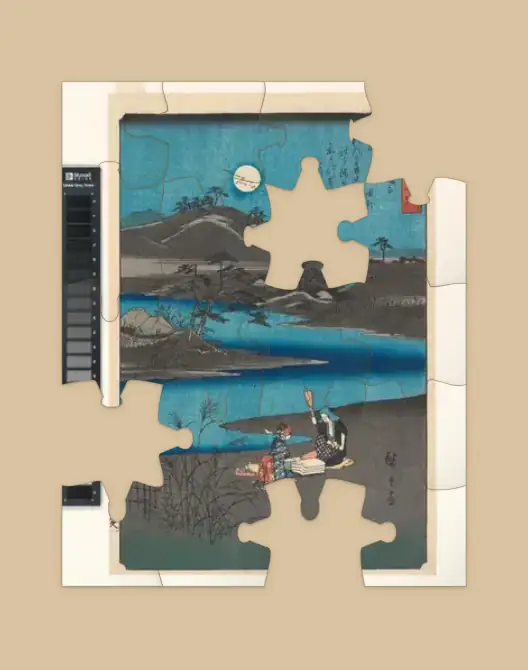
The calm, in one line
What makes a puzzle game relaxing.
A puzzle relaxes when nothing is chasing you. No timer, no score, no fail state, nothing asking you to come back tomorrow. A jigsaw is slow by nature: your hands stay busy while your mind slows down, the picture appears a piece at a time, and you can stop the moment you have had enough. That is the whole of it, and it is why quiet jigsaw puzzles unwind you when a busy phone game does not.
Most people play the classic jigsaw table, and why would they not? Classic jigsaw is, after all, classic. But a jigsaw can be more. Below are ten ways we have changed the old formula to make you some cozy puzzle games, ordered from the calmest down to the one that will not let you rest at all.
What kind of cozy this is
Cozy, but not a world to look after.
Most cozy games hand you a farm, a shop or a little village, and then ask you to come back and tend it. This is not one of those. There is nothing to grow, nothing to decorate and nothing waiting on you tomorrow. It is a table, a picture and as long as you feel like sitting there. It opens in a browser tab, so there is nothing to install and no store to buy it from. If you want somewhere to live for forty hours, those games are lovely and this is not one of them. If you want a few quiet minutes that ask nothing of you, this is the smaller thing.
The ten, from calmest down
All the same jigsaw, with one rule changed.
A puzzle loses its calm for each of three things: the work changing without you, a way to fall behind, and someone else waiting on you. The order below is scored on exactly that, so it is a rule you can check rather than a matter of taste. A changing picture does not count, which is why Switching Puzzle sits so high. The cut, the pieces and everything you have already joined stay put, so the work never changes underneath you. Only the view does.
-
The quietest table here. You pick the picture and the piece count, and nothing else happens. It keeps itself while you are gone, so you can stop mid piece and come back on Thursday to the same half-built thing.
MoodWhen you want to stop thinking.
-
Ten paintings and one table. Every time two pieces join, the whole picture becomes the next one. Nothing about the puzzle moves, though. The cut, the pieces and everything you have already joined stay exactly where they were, so you carry on building the same jigsaw under a new view. Hold a picture steady for five seconds whenever you want to look at it properly.
MoodWhen you want to be surprised without being hurried.
-
A patience deal for one. Pieces wait in eight columns and a stock, and you free them group by group. Nothing chases you, but there is an order to work out, so your hands and your head are both busy. Short casual rounds, easy to put down.
MoodWhen you are restless rather than tired.
-
Two players, one puzzle, and at first you each see only your own half. Once a group reaches the mat, either of you can move it. It never needs you to talk, which makes it the gentlest way to build something with a person who is far away.
MoodWhen you want company without conversation.
-
The pieces are magnetic. Opposites pull together and settle into a neutral join, like charges push apart. Nothing is timed and nothing is lost, but the table has opinions and you have to work around them. Five steps, from gentle up to pure charge.
MoodWhen you want a little mischief in it.
-
One of you sees the picture. The other sees plain pieces and listens. Nothing is at stake, but it asks for your voice the whole way through, so it is warm rather than restful. It usually turns into a lot of laughing at each other’s descriptions.
MoodWhen you want to hear their voice for a while.
-
Several paintings share one table, and every join re-deals all of them. The pool thins as you go, until one picture is left and you finish that one. It is the hardest thing here, until the last entry.
MoodWhen you want a real challenge.
-
The same picture and the same cut, on two separate boards. First one finished wins. Everything calm about the other tables is deliberately switched off. Best with the friend who insists jigsaws are not a competition.
MoodWhen you want to win.
-
The same race, except you can see faint ghosts of where they are working. Watching someone gain on you is the least restful thing on this site, and that is exactly what it is for.
MoodWhen you want the race to feel close.
-
Every dial turned. The most paintings your device allows, resemblance pushed to the stop labelled cruel, do not start here, and the pieces tumbled so they begin turned. Switch scoring on and every join is timed: ten points per painting still standing, counting down a point a second, double on the marked one. You finish with a total and a link that sets a friend the same table.
MoodWhen you want to lose, then pass it on.
Why it stays calm
Nothing here is trying to win your evening, unless you ask it to.
Most relaxing games still nudge you. A streak to keep, a high score, a little red badge. The tables at the top of the list do not. Pieces snap together with a soft chime, the picture slowly appears, and when you have had enough you just close the tab. It keeps nothing from you and asks nothing of you.
The last three are the exception, and they are meant to be. Battle is a race, and Impossible with everything turned up is timed and scored. They sit at the bottom because that is the honest place for them. Nothing pushes you there.
How it works
Open it, breathe out.
first
Choose a picture
A painting from the gallery, or a photo of your own. Soft and flat for calm, busy for a gentle challenge.
then
Pick a size
From 25 big, forgiving pieces up to a slow 2,000. No wrong answer, just how long you would like it to last.
and
Settle in
Just you, the pieces and as long as you like. Leave it half done and come back to the same table whenever.
Questions
A few honest answers.
Are there relaxing puzzle games with no timer or score?
That is the whole idea for the first seven tables on the list. No clock, no score, no streak to keep, no little red badge. Pieces settle into place with a soft chime and the picture slowly appears. The last three are races and a scored run, and they are marked as such, so you only meet a timer if you go looking for one.
Is it good on my own?
That is exactly what it is for. Just you, the pieces and the quiet, at whatever pace you like. You can share the table if you ever want company, but it is built to be lovely alone.
Are these relaxing puzzle games good for adults?
Yes. Choose a real painting and a few hundred pieces and it becomes an adult, unhurried thing, closer to reading than to a phone game. Or keep it small and soft for a gentle wind-down. You set the pace either way.
Is it free?
Free, no account, no app, nothing to buy. It opens in your browser and that is it. Nothing pops up over the puzzle, and nothing asks you to upgrade.
Can I play a relaxing puzzle with someone else?
If you like. Share a link and one person far away builds the same puzzle with you, and you can talk while you build. Four of the ten are made for two.
Do I need to download anything?
No. It runs right in your browser, on a phone or a laptop, with nothing to install. Open the page and the table is there.
What can I build?
A famous painting from the gallery, or any photo of your own. The paintings come from a museum collection, and a photo you add is processed right there in your browser and never uploaded anywhere, so even a private picture is safe to build. Pick something soft if you want it calm, something busy if you want a gentle challenge.
Can I start on one device and finish on another?
Yes. Open the table’s link on another device, your laptop at work, say, and you carry on the very same cut. The picture lives only on the device you chose it on, so on the new one you pick a fresh picture for the same pieces.
Which one should I start with?
Classic, unless something on the list caught your eye. It is the plain jigsaw with nothing added, and every other table here is that same jigsaw with one rule changed. Start there, then work down the list when you want a little more.
Are any of these two player?
Most of them. Half & Half and Guide & Builder are built for two, Battle is a race between two, and Classic, Monopole, Switching Puzzle and Impossible all work either alone or with someone. Jigsaw Solitaire is the only one that is solo only.
What is the hardest one here?
Impossible with every dial turned up: the most paintings, the resemblance slider at its cruellest stop, the pieces tumbled so they start turned, and scoring switched on. It is the last entry on the list for a reason.
Is it good before bed?
That is the point. No bright wins or losses, just pieces settling into place. Easy to start, easy to leave, easy on the eyes.