Artist of the week
Poets, pines and pale ink
Ike no Taiga
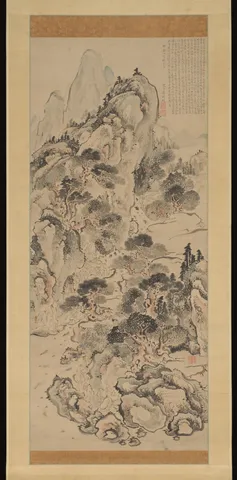
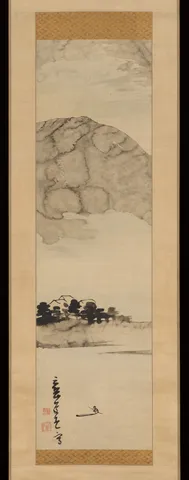
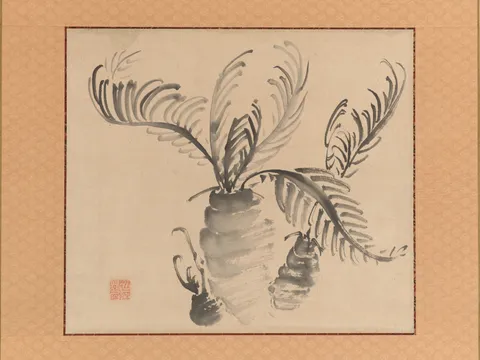
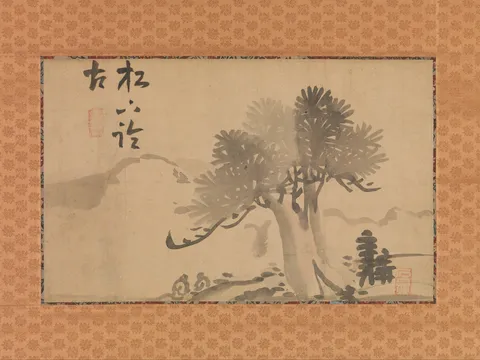
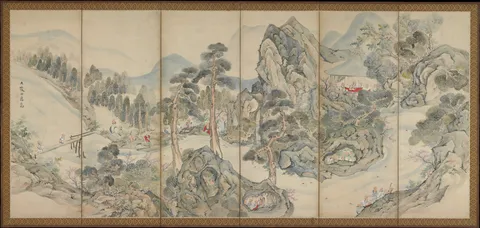
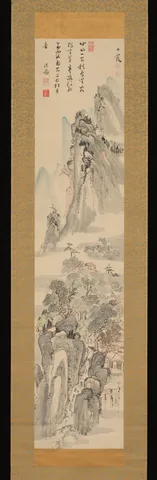
Ike no Taiga in Kyoto, from the 1730s to the 1760s, painting nanga, the scholars’ art Japan learned from China. The Orchid Pavilion gathering twice, as a tall scroll and across a folding screen: poets sit along a winding stream as little wine cups float past. Then a finger painting of a grey mountain in blotted ink and one boatman, a cycad in quick grey strokes, an old pine under a few large characters, and steep autumn peaks over a thatched house, with a poem written above.
As a puzzle
These build slowly: cream mounts, blank paper and soft grey ink make up most of every picture. Start from the darkest strokes, the pine needles, the trees along the shore, the cycad’s fronds and the calligraphy, then add the gold brocade bands at top and bottom. The wide pale water of the finger painting and the patterned orange mounts around the cycad and the pine are the slowest. The Orchid Pavilion screen, crowded with poets, trees and red cups, takes a moderate count; keep the others low.
A good size here: 30–150 pieces.
Also filed under Nanga
Subjects here: LandscapesEveryday Life
6 pictures, pick one to build